The Eco-Link@BKE bridge celebrates a decade of supporting safe wildlife passage.
SINGAPORE – A 10-year-old wildlife bridge, the Eco-Link@BKE, has proven to be a lifeline for native creatures, offering a safe passage for them between the Bukit Timah and Central Catchment nature reserves. The overhead bridge, which connects two critical green spaces, has dramatically reduced roadkill and allowed wildlife such as pangolins, mousedeer, and other threatened species to safely cross the Bukit Timah Expressway (BKE).
The bridge, which opened in April 2014, has resulted in a 90% reduction in the number of pangolins killed on the road. Between 1994 and March 2014, an average of two Sunda pangolins, a critically endangered species, were killed each year along the BKE. However, since the bridge’s opening, only one pangolin has been killed in the area, signaling a significant improvement in road safety for wildlife.
This 62-meter-long bridge, a first of its kind in Southeast Asia, was built to alleviate the problem of habitat fragmentation caused by the expressway. Prior to the bridge, the BKE had been a physical barrier that isolated populations of forest-dwelling animals, which could lead to inbreeding and a decline in biological fitness. The bridge, which spans the expressway, has restored connectivity between the two nature reserves, allowing the wildlife populations to mix and thrive.
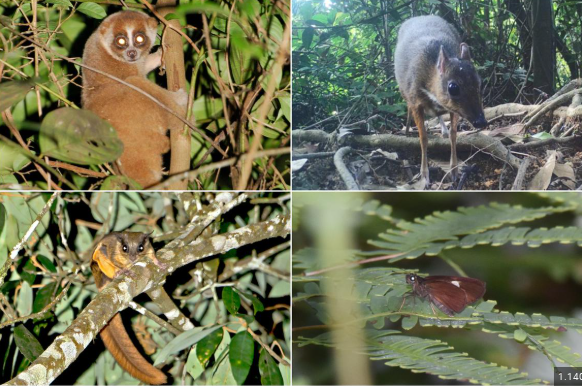
The Eco-Link@BKE has been a success, with over 100 species of fauna recorded using the bridge since its inception. Motion-sensor cameras have captured images of species like macaques, common palm civets, and lesser mousedeer. The lesser mousedeer, one of the world’s smallest hoofed animals, has been seen more frequently on the bridge, and in 2021, it was observed moving between the Bukit Timah and Central Catchment nature reserves, expanding its range.
Other species, including the Sunda slow loris, Horsfield’s flying squirrel, and Malayan colugo, have also made appearances, showcasing the bridge’s ability to support a diverse range of wildlife. The successful use of the bridge highlights the importance of ecological connectivity in urban environments like Singapore.
In addition to the Eco-Link@BKE, other measures have been introduced to assist wildlife in crossing roads, such as aerial rope bridges for macaques, poles for colugos, and underground culverts. The authorities are also planning to build another bridge connecting Bukit Timah Nature Reserve and the Western Water Catchment area by 2026.
While the Eco-Link@BKE has been a significant step in reducing the impact of the BKE on local wildlife, experts suggest that noise pollution from the expressway may still hinder its full effectiveness. To improve the bridge’s function, suggestions for a soundproof roof structure have been proposed, which would help mitigate the traffic noise while enhancing the connectivity between green spaces.